

 Deutsch
 English
 français
 español
 العربية
 中文

Variable frequency drives are everywhere in modern factories because they save energy and control motors precisely. But when many VFDs operate on the same three-phase four-wire system, they can generate 3rd and 9th harmonic currents that accumulate in the neutral conductor. The result is a serious and often underestimated problem: neutral overheating, insulation damage, and even neutral burnout. Active Harmonic Filter is designed to eliminate these harmonic currents before they damage cables and equipment.
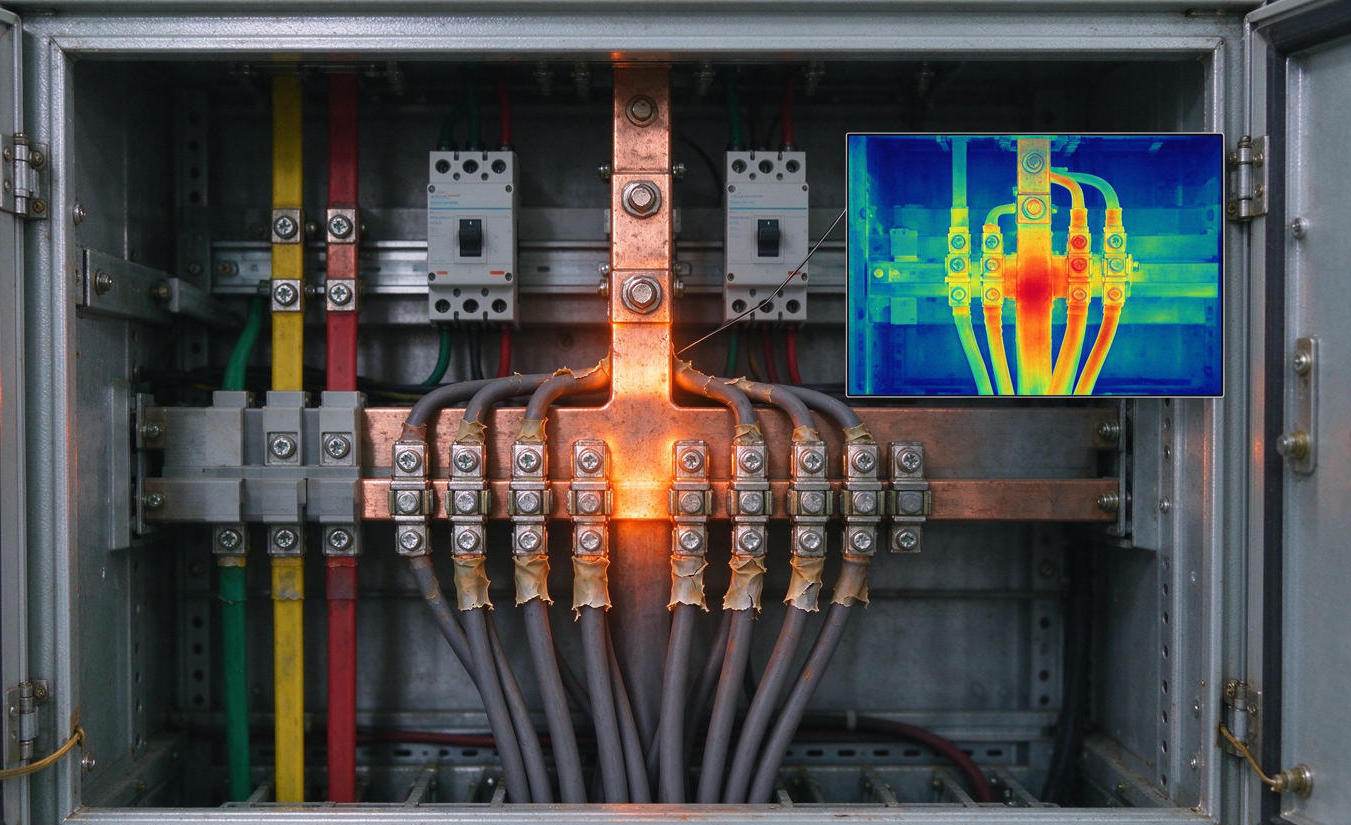
A VFD is a nonlinear load. It does not draw current in a smooth sinusoidal waveform. Instead, it switches power electronically, producing harmonic currents at multiples of the fundamental frequency. In a three-phase system, the 3rd harmonic (150 Hz on a 50 Hz system) and the 9th harmonic (450 Hz) are called triplen harmonics. They behave differently from other harmonics.
In a balanced three-phase system, the fundamental currents cancel in the neutral because they are 120 degrees apart. But triplen harmonic currents are in phase with each other. Instead of canceling, they add together in the neutral conductor. If each phase carries a 3rd harmonic current, the neutral can carry up to three times that harmonic current. The neutral conductor is often sized only for unbalanced fundamental current, not for this harmonic accumulation.
This is why a neutral can overheat even when the phase currents appear balanced. The phase conductors may look normal, but the neutral is carrying hidden harmonic current.
The danger comes from I²R heating. Power loss in a conductor is proportional to the square of the current. If the neutral carries three times the expected harmonic current, the heating can be nine times higher in that portion of the conductor. Over time, the insulation softens, discolors, and cracks. Terminal connections loosen under thermal cycling. In severe cases, the neutral conductor melts or ignites nearby insulation.
The 9th harmonic adds another layer of stress. Because it is also a triplen harmonic, it contributes to neutral current accumulation. It can also interact with transformers and cause additional heating. In a VFD-heavy facility, the combination of 3rd and 9th harmonics can push the neutral beyond its design limit without triggering a normal overload protection device.
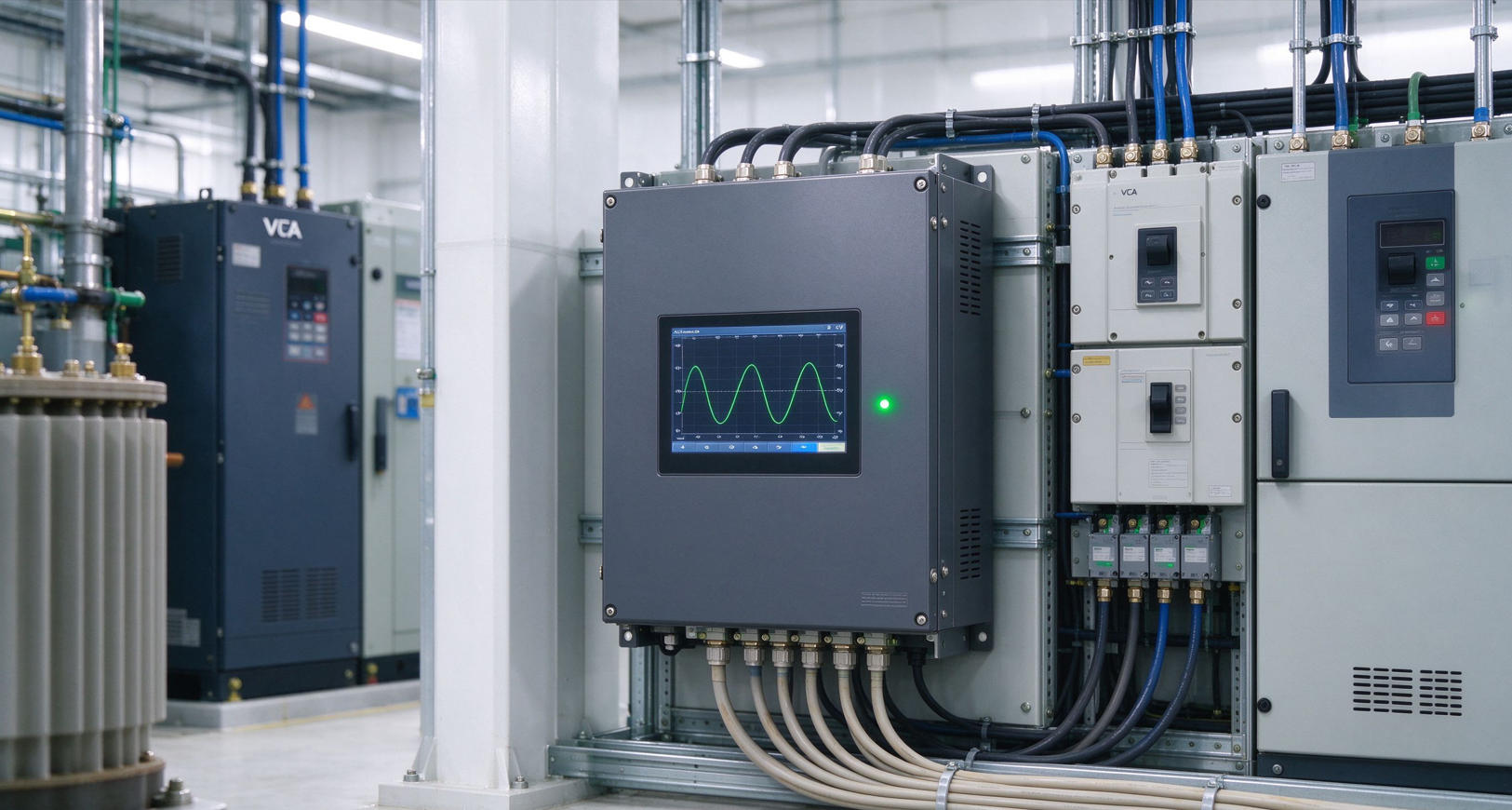
Active Harmonic Filter is a power electronics device that continuously monitors the current waveform and identifies harmonic distortion. It then generates counteracting currents that cancel the targeted harmonics. For 3rd and 9th harmonic problems, AHF can detect these components and inject opposite-phase currents to remove them from the system.
Unlike passive filters, AHF is dynamic. It responds in less than one millisecond and adapts to changing VFD load conditions. It does not rely on fixed tuning and does not create resonance with the system impedance. This makes it suitable for facilities where VFD loading changes throughout the production cycle.
By reducing 3rd and 9th harmonic currents, AHF lowers the RMS current in both phase and neutral conductors. Lower current means lower I²R losses. The neutral stops carrying excessive harmonic current, and the risk of overheating and burnout falls sharply. Equipment operates at a safer temperature, and the electrical system becomes more stable.
Reduced Neutral Overload
AHF removes the triplen harmonic currents that accumulate in the neutral. The neutral current returns to a safe level, protecting insulation and terminals from thermal damage.
Lower Line Losses
Harmonic currents increase total RMS current and create extra heating in cables and transformers. Filtering harmonics reduces these losses and improves energy efficiency.
Improved Equipment Safety
Transformers, cables, and switchgear operate at lower temperatures. Insulation life is extended, and the risk of electrical fire caused by neutral overheating is reduced.
Fewer Production Interruptions
Neutral burnout can cause unexpected shutdowns and costly repairs. AHF reduces this risk and supports continuous operation.
No Resonance Risk
AHF uses closed-loop control and does not introduce the resonance problems that passive filters can create in VFD-heavy systems.
Q: Why does the neutral overheat when the three-phase currents look balanced?
A: Balanced fundamental currents cancel in the neutral, but 3rd and 9th harmonic currents are in phase and add together. The neutral can carry up to three times the triplen harmonic current of one phase. This hidden current causes overheating even when phase current readings appear normal.
Q: How does AHF reduce line losses and neutral overload at the same time?
A: AHF measures the harmonic currents and injects canceling currents. This reduces the total RMS current flowing in the phase and neutral conductors. Lower RMS current means lower I²R losses and less heat in cables, transformers, and neutral conductors.
Q: What should be checked before installing AHF in a VFD-heavy facility?
A: A power quality audit should measure the harmonic spectrum, neutral current, phase current, transformer impedance, and load variation. The AHF capacity should be sized based on harmonic current, not only on total load power. CT placement and protection coordination should also be reviewed to ensure correct operation.
In VFD-heavy facilities, 3rd and 9th harmonics are not a minor power quality issue. They accumulate in the neutral, increase line losses, and can cause neutral burnout and equipment damage. Active Harmonic Filter removes these harmonic currents dynamically, reduces neutral overload, lowers line losses, and improves the safety and reliability of the entire electrical system. For facilities with growing VFD loads, AHF is a direct and effective solution.



 IPv6-Netzwerk unterstützt