

 Deutsch
 English
 français
 español
 العربية
 中文

Modern hospitals run on sensitive electronics. LED lighting, MRI scanners, CT machines, surgical robots, and diagnostic imaging systems all depend on clean, stable electricity. But many of these devices also create harmonic distortion that quietly degrades power quality. Active Harmonic Filter removes those harmonics and protects the equipment that patients and clinicians rely on.
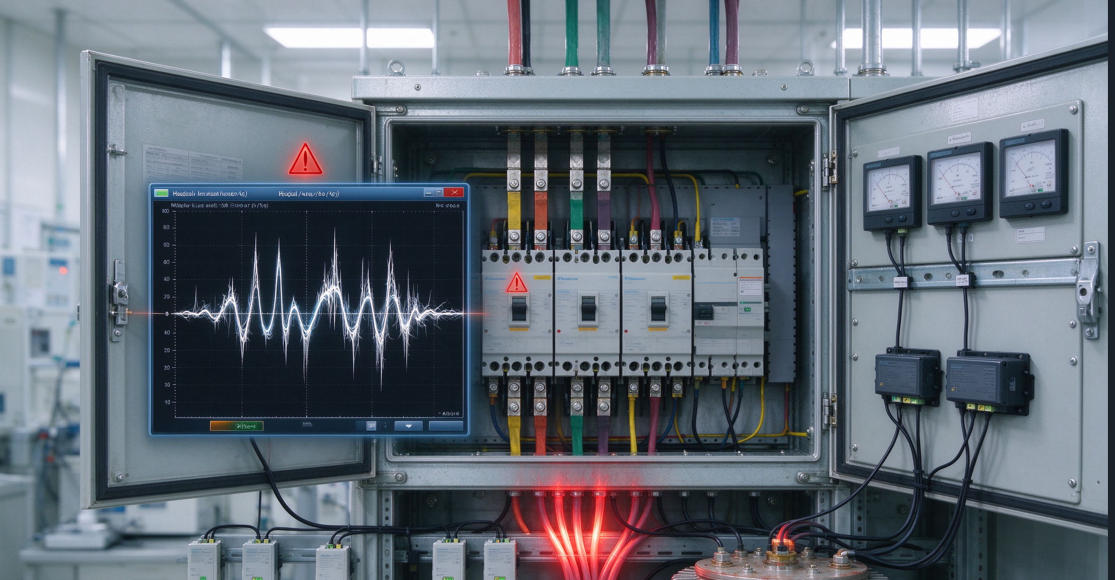
Hospitals are not typical industrial facilities, but they have their own power quality challenges. LED lighting is everywhere because it saves energy and lasts long. However, LED drivers are nonlinear loads. They draw current in short pulses instead of smooth sine waves, producing harmonic currents, especially the 3rd harmonic and other odd-order harmonics.
Large medical equipment adds another layer. MRI systems, CT scanners, and other imaging devices use powerful electronics, rectifiers, and switching power supplies. These loads are sensitive to voltage distortion, but they can also contribute harmonic currents to the hospital’s electrical network.
When many LED drivers and medical devices operate together, harmonic currents accumulate. They flow through neutral conductors, transformers, and distribution panels. The result is overheating, voltage distortion, and interference with sensitive equipment.
Medical imaging depends on precise electrical conditions. Harmonics can distort the voltage waveform and cause several problems:
Image artifacts and poor image quality – MRI and CT systems may produce unclear or distorted images when supplied with distorted voltage. This can affect diagnosis and require repeated scans.
Equipment malfunction and nuisance tripping – Sensitive control electronics may interpret harmonic distortion as a fault and shut down unexpectedly.
Overheating of transformers and cables – Harmonic currents increase RMS current and cause extra I²R losses. Transformers and neutral conductors run hotter than designed.
Reduced equipment life – Continuous operation under distorted voltage stresses power supplies, capacitors, and cooling systems inside medical devices.
Interference with monitoring equipment – Patient monitors, ECG systems, and laboratory instruments can be affected by electromagnetic noise and voltage distortion.
For a hospital, these problems are not only technical. They affect patient safety, clinical workflow, and operating costs.
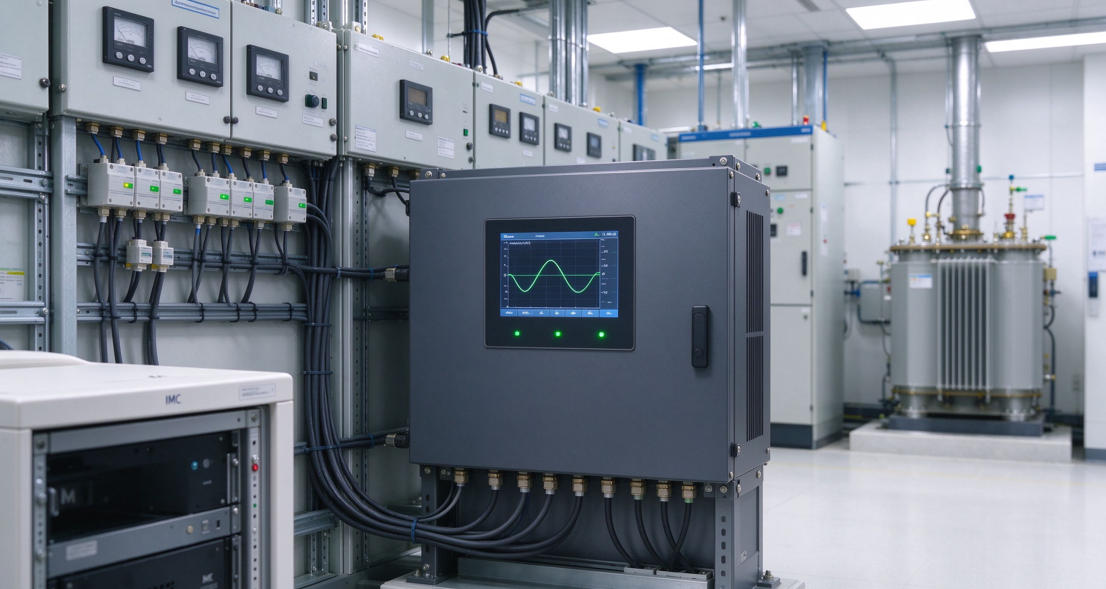
Active Harmonic Filter is a power electronics device that continuously measures the current waveform and identifies harmonic distortion. It then generates counteracting currents that cancel the targeted harmonics. Unlike passive filters, AHF is dynamic. It responds in less than one millisecond and adapts to changing loads throughout the day.
In a hospital environment, AHF offers several important advantages:
Precise harmonic cancellation
AHF uses digital signal processing to separate harmonic components from the fundamental current. It can target the 3rd harmonic from LED drivers and the harmonic spectrum produced by medical equipment. It removes harmonic currents before they accumulate in neutrals and transformers.
No resonance risk
Passive filters can resonate with system impedance and amplify harmonics. AHF uses closed-loop control and does not create resonance. This is important in hospitals where multiple sensitive loads share the same electrical network.
Low electromagnetic interference
AHF produces very little EMI, so it does not disturb MRI rooms, imaging suites, or laboratory instruments. It can be installed near critical equipment without affecting its operation.
Improved voltage stability
By reducing harmonic currents, AHF lowers voltage distortion. Cleaner voltage supports stable imaging, reliable equipment operation, and fewer unexpected shutdowns.
Lower line losses and safer neutrals
Reducing harmonic current lowers RMS current in cables and neutrals. This reduces heating, improves energy efficiency, and lowers the risk of neutral overload in LED-heavy lighting circuits.
Q: Why do LED lights and MRI machines both cause harmonic problems?
A: LED drivers are nonlinear loads that draw pulsed current and generate odd-order harmonics, especially the 3rd harmonic. MRI and CT systems use rectifiers and switching power supplies that also produce harmonic currents. When many such loads operate together, harmonics accumulate and distort the voltage waveform. Sensitive medical equipment then operates under poor power quality conditions.
Q: How does AHF protect MRI and other sensitive medical equipment?
A: AHF measures harmonic currents and injects canceling currents in real time. This reduces voltage distortion and harmonic current flow in the hospital network. MRI and CT systems receive cleaner voltage, which supports stable imaging and reduces the risk of nuisance tripping or image artifacts. AHF also produces low EMI, so it does not interfere with medical devices.
Q: What should be checked before installing AHF in a hospital?
A: A power quality audit should measure the harmonic spectrum, neutral current, voltage THD, load variation, and the location of sensitive equipment. The AHF capacity should be sized based on harmonic current and load profile, not only on total power. Installation should avoid areas with strict EMI limits, and coordination with existing protection systems should be reviewed.
Hospitals depend on clean electricity for diagnosis, treatment, and patient safety. LED lighting and advanced medical equipment improve efficiency and care, but they also introduce harmonic distortion that can degrade equipment performance. Active Harmonic Filter removes those harmonics dynamically, reduces voltage distortion, lowers line losses, and protects sensitive devices such as MRI and CT systems. For hospitals investing in high-end medical technology, AHF is a practical way to ensure that equipment performs as intended.



 IPv6-Netzwerk unterstützt