

 Deutsch
 English
 français
 español
 العربية
 中文
中文
Stromqualität im Rechenzentrum: Harmonische Dämpfung Fallstudie

Moderne Rechenzentren sind stark von empfindlichen elektronischen Geräten abhängig. Server, Speichersysteme und Netzwerkkomponenten nutzen nichtlineare Netzteile. Diese Komponenten erzeugen erhebliche Oberwellen im Stromnetz. Hohe Oberwellenpegel führen zu Geräteüberhitzung und unerwarteten Ausfallzeiten.
Eine Großanlage hatte kürzlich während des Betriebs mit gravierenden Problemen der Stromqualität zu kämpfen. Das Technikerteam vor Ort berichtete von häufigen Ausfällen der Kondensatorbatterien. Sie beobachteten sichtbare Ausbeulungen an den Kondensatoren und durchgebrannte Schütze. Diese Symptome deuteten auf hohe Oberwellenresonanz und übermäßige Spannungsverzerrung hin.
Erste Messungen vor Ort ergaben kritische Verzerrungswerte im System. Der Gesamtspannungs-Oberschwingungsanteil (THD_u) erreichte 5,9 %. Dies überschritt den in den nationalen Normen für einen sicheren Betrieb festgelegten Grenzwert von 5 %. Hohe Spannungsverzerrungen können zu Datenfehlern und Hardwareausfällen führen.
Der Gesamtklirrfaktor (THD_i) betrug 23,5 %. Als Hauptursachen wurden Oberschwingungen 3. und 5. Ordnung identifiziert. Oberschwingungen. Die dritte Oberschwingung ist in vielen Rechenzentren besonders gefährlich. Sie sammelt sich im Neutralleiter an und stellt eine Brandgefahr dar.
| Parameter | Wert vor der Schadensminderung | Standardgrenze | Status |
| Spannungsverzerrung ($THD_u$) | 5,9 % | < 5,0 % | Scheitern |
| Stromverzerrung ($THD_i$) | 23,5 % | < 10,0 % | Scheitern |
| Primäre Harmonische | 3., 5. | N / A | Hoch |
Zur Behebung dieser Probleme installierte die Anlage einen 300-A-Aktivfilter (APF). Der APF überwacht den Laststrom in Echtzeit und speist anschließend einen gleich großen, entgegengesetzten Kompensationsstrom ein. Dadurch werden die Oberschwingungen effektiv eliminiert und das Stromnetz bereinigt.
Der 300-A-APF wurde in den Hauptverteilerraum integriert. Dieser zentrale Ansatz schützt alle nachgelagerten Serverracks und Hardware. Das Gerät zeichnet sich durch schnelle digitale Signalverarbeitung für eine rasche Reaktionszeit aus und ist für die in Cloud-Computing-Umgebungen üblichen dynamischen Lasten geeignet.
Nach der Inbetriebnahme des automatischen Leistungsfilters (APF) verbesserte sich die Stromqualität umgehend. Die Spannungsverzerrung sank von 5,9 % auf stabile 4,2 %. Dadurch entsprach das System wieder den nationalen Normen. Die elektrische Umgebung stabilisierte sich für empfindliche IT-Geräte.
Die Stromverzerrung erfuhr die deutlichste Verbesserung in der Anlage. Der THD_i-Wert sank nach der Behandlung von 23,5 % auf nur noch 2,0 %. Die zuvor unregelmäßige Stromwellenform wandelte sich in eine saubere Sinuswelle um. Diese Reduzierung senkte die Wärmebelastung von Kabeln und Transformatoren erheblich.
| Parameter | Wert nach der Schadensminderung | Verbesserung % |
| Spannungsverzerrung (THD_u) | 4,2 % | 28,8 % |
| Stromverzerrung (THD_i) | 2,0 % | 91,5 % |
| Leistungsfaktor (PF) | ~1,00 | Optimiert |
Die Installation hat die Hardwareprobleme des Kunden behoben. Die Kondensatorbänke arbeiten nun bei normalen Temperaturen und wölben sich nicht mehr. Die Wartungskosten sind gesunken, da die Schütze nicht mehr durchbrennen. Das Rechenzentrum zeichnet sich nun durch höhere Zuverlässigkeit und ein geringeres Betriebsrisiko aus.
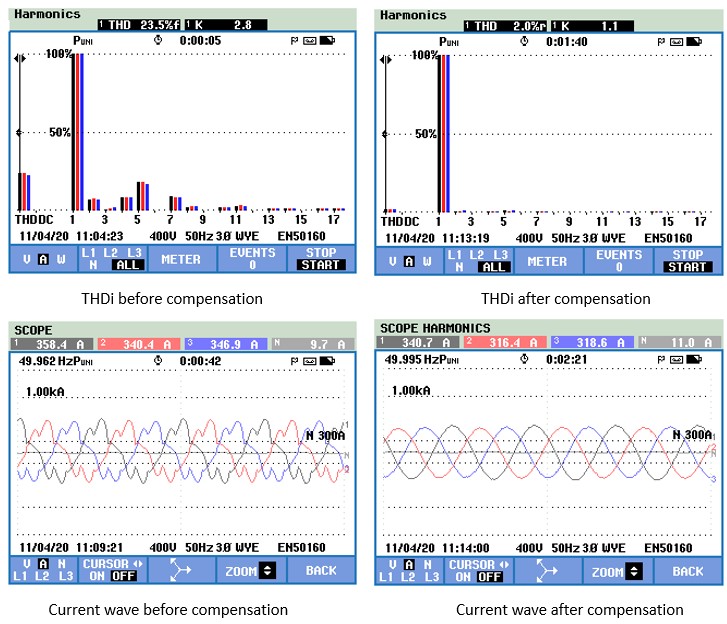
Wir empfehlen aktive Leistungsfilter für alle Tier-III- und Tier-IV-Rechenzentren. Passive Filter bieten oft nicht die erforderliche Geschwindigkeit für moderne Serverlasten. APF-Geräte ermöglichen die gezielte Filterung spezifischer Oberwellen. Dies gewährleistet eine saubere Stromversorgung für kritische digitale Dienste.
Regelmäßige Stromqualitätsprüfungen sind auch für den langfristigen Betrieb unerlässlich. Die Lastprofile ändern sich mit dem Hinzufügen weiterer Server zu den Racks. Die Überwachung der THD-Werte hilft, zukünftige Geräteschäden zu vermeiden. Ein proaktiver Ansatz zur Stromqualität gewährleistet die unterbrechungsfreie Verfügbarkeit Ihrer Infrastruktur rund um die Uhr.



 IPv6-Netzwerk unterstützt