

 Deutsch
 English
 français
 español
 العربية
 中文
中文
Verbesserung Stromqualität in Speichersystemprojekten in Indien
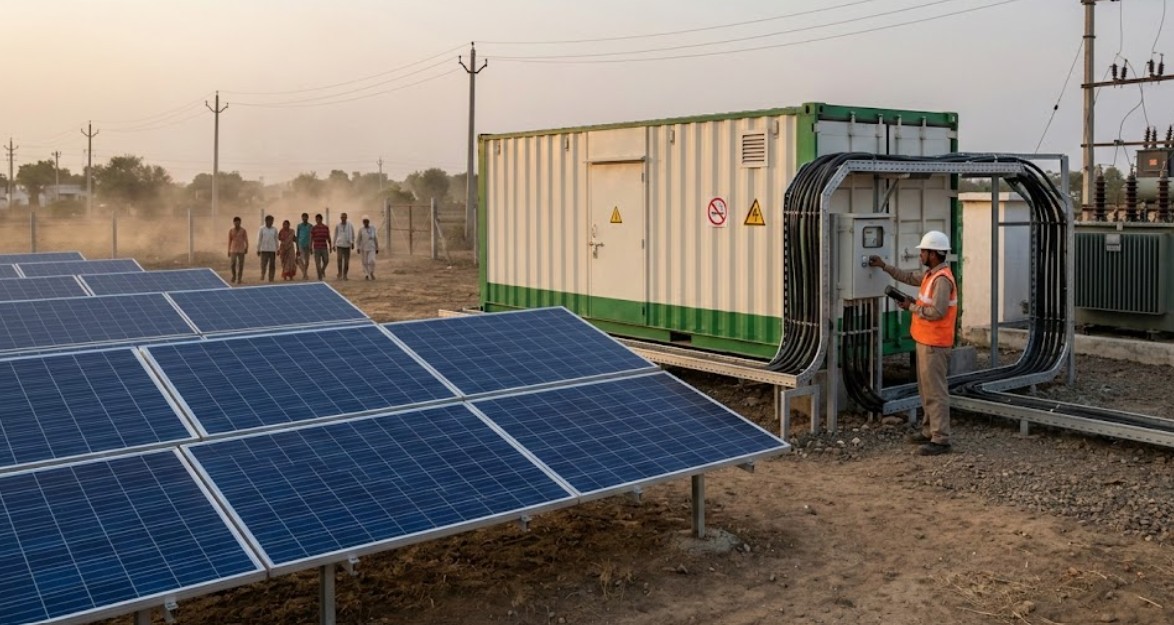
Indiens rascher Übergang zu erneuerbaren Energien hat den Fokus stark auf die Integration von Solarenergie gelenkt. Die intermittierende Natur der Solarstromerzeugung stellt jedoch besondere Herausforderungen an die Netzstabilität. Die Implementierung eines Energiespeichersystem ist nun eine entscheidende Voraussetzung, um diese Schwankungen zu bewältigen und hohe Standards zu gewährleisten. Stromqualität Die
Solare Photovoltaikanlagen führen häufig zu Oberschwingungen und Spannungsschwankungen im lokalen Stromnetz. In Indien, wo die Netzstabilität in ländlichen Gebieten oft unzureichend ist, verstärken sich diese Probleme. Hohe Oberschwingungsanteile können zur Überhitzung von Transformatoren und zum vorzeitigen Ausfall empfindlicher Industrieanlagen führen.
Ein Energiespeichersystem Sie fungieren als Puffer zwischen der Solaranlage und dem Stromnetz. Durch den Einsatz fortschrittlicher Leistungsumwandlungssysteme (PCS) können diese Anlagen Blindleistung in Echtzeit einspeisen oder aufnehmen. Diese Fähigkeit ist unerlässlich, um die Spannungspegel innerhalb der in den indischen Netzanschlussbedingungen festgelegten gesetzlichen Grenzwerte zu halten.
Das primäre technische Ziel ist die Aufrechterhaltung einer reinen Sinuswellenform. Moderne Wechselrichter in Solaranlagen müssen mit Batteriespeichern kombiniert werden, um eine „synthetische Trägheit“ zu erzeugen. Dies trägt dazu bei, dass sich das Stromnetz nach Frequenzabweichungen, die durch plötzliche Bewölkung oder Laständerungen verursacht werden, schnell wieder erholt.
| Technischer Parameter | Auswirkungen von Solarenergie ohne Speicherung | Nutzen des Energiespeichersystems |
| Spannungsstabilität | Häufige Absenkungen und Schwellungen | Echtzeit-Spannungsregelung |
| Frequenzregelung | Schnelle Schwankungen | Frequenzgang der Wirkleistung |
| Harmonischengehalt | Hoher Klirrfaktor (THD) durch nichtlineare Lasten | Aktive Filterung und Glättung |
Ein kürzlich in Maharashtra realisiertes Projekt umfasste eine 5-MW-Solaranlage, die an eine Produktionsstätte angeschlossen war. Die Anlage war aufgrund von Spannungsschwankungen häufig von Produktionsausfällen betroffen. Durch die Installation eines 2-MWh-Energiespeichersystems konnte die Gesamtklirrfaktor (THD) um 40 % reduziert werden.
Das System wurde so programmiert, dass es tagsüber die Lastspitzenkappung priorisierte und nachts die Spannungsstabilität gewährleistete. Dieser duale Ansatz optimierte die Rentabilität für den Projektentwickler. Zudem wurde eine saubere und konstante Stromversorgung des Werks sichergestellt.
Die Frequenzregelung ist für die Power System Operation Corporation (POSOCO) in Indien von großer Bedeutung. Solarenergiespeichersysteme bieten eine schnelle Frequenzregelung (Fast Frequency Response, FFR), die herkömmliche Wärmekraftwerke nicht erreichen. Diese schnelle Reaktion verhindert Kaskadenausfälle bei Netzstörungen.
| Besonderheit | Blei-Säure-Batteriesysteme | Lithium-Ionen-Speichersysteme |
| Ansprechzeit | Mäßig (Sekunden) | Ultraschnell (Millisekunden) |
| Lebenszyklus | 500 - 1.500 Zyklen | 4.000 - 8.000 Zyklen |
| Energiedichte | Niedrig | Hoch |
Vor der Inbetriebnahme des Energiespeichersystems müssen Ingenieure eine detaillierte Netzqualitätsprüfung durchführen. Dazu gehört die Messung des vorhandenen Oberwellenprofils und die Ermittlung der Resonanzfrequenzen des lokalen Netzes. Die korrekte Dimensionierung des Batteriespeichers ist ebenfalls entscheidend, um lokale Spannungsspitzen abzufangen.
Des Weiteren sollte bei der Auswahl des Leistungsumwandlungssystems (PCS) der Vierquadrantenbetrieb im Vordergrund stehen. Dadurch kann das System Wirk- und Blindleistung unabhängig voneinander verarbeiten. Im indischen Kontext ist aufgrund der hohen Umgebungstemperaturen ein robustes Wärmemanagement für die Batterien ebenso wichtig.
Da Indien bis 2030 eine Kapazität von 500 GW an nicht-fossilen Energieträgern anstrebt, ist die Bedeutung von Speichern unabdingbar. Die Verbesserung der Stromqualität durch Batterieintegration stellt sicher, dass Solarenergie eine verlässliche Ressource und keine Belastung darstellt. Ingenieure im technischen Support müssen diesen Lösungen weiterhin Priorität einräumen, um eine resiliente Energiezukunft zu gestalten.



 IPv6-Netzwerk unterstützt